
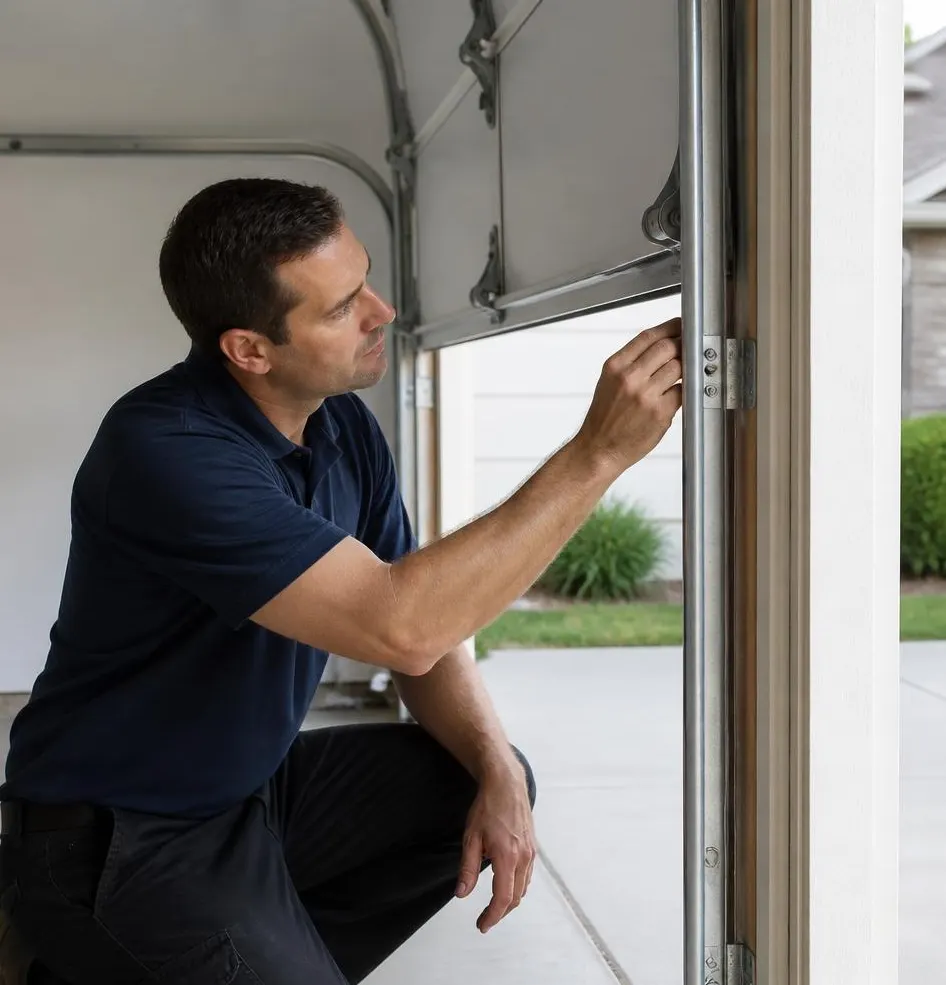
What a Technician Usually Finds on These Calls
By the time cooler weather rolls into Polk County, a typical service call looks the same: a homeowner noticing their garage door suddenly squeaks louder, drags on one side, or won't quite seal at the bottom anymore. Nine times out of ten, it's not a new problem — it's months of summer humidity and hurricane-season stress finally showing up. Tracks have collected grit from afternoon downpours, hardware has started to rust at the bolt heads, and wood or composite panels have swollen just enough to bind against the frame. None of this is dramatic yet, which is exactly why it gets ignored until the door is harder to lift or the opener starts straining.
Why Central Florida's "Winter" Still Matters for Garage Doors
Lake Wales doesn't get snow or ice, but the shift from a wet, humid summer into a drier, cooler winter puts real stress on a garage door system. Wood and composite panels that swelled with moisture all summer begin to contract as humidity drops, which can loosen screws, open small gaps in weatherstripping, or reveal hairline cracks in panels that were hidden while the material was swollen. Metal hardware that sat in salt-tinged, humid air for months is often at its most corroded right as temperatures cool. And while hurricane season officially winds down, Lake Wales can still see strong fall storms into November, so a door that's been quietly weakened by wind-load stress all season needs a real inspection, not just a glance.
A Practical Pre-Winter Checklist
1. Inspect and Replace Weatherstripping
Bottom seals and side weatherstripping take a beating from UV exposure and heat all summer. Rubber that's cracked, flattened, or pulling away from the track won't keep out cooler drafts or wind-driven rain in the next storm. Replacement strips are inexpensive and usually a straightforward DIY job, but make sure the new seal matches your track type so it doesn't catch during operation.
2. Check Hardware for Rust and Corrosion
Run a hand along hinges, brackets, and roller bolts. Surface rust can often be cleaned off and treated, but pitted or flaking hardware is a structural weak point — especially on hinges that bear the door's full weight every cycle. Replacing a handful of rusted bolts now is far cheaper than dealing with a hinge failure later.
3. Lubricate Moving Parts
Rollers, hinges, and the torsion spring itself should get a light coating of garage-door-specific lubricant (not WD-40, which washes out quickly and attracts dust). Months of humidity tend to gum up old lubricant with grit, so wipe tracks and hardware clean first, then reapply.
4. Test the Balance and Listen for Strain
Disconnect the opener and lift the door manually halfway — it should stay in place on its own. If it drops or shoots upward, the spring tension has shifted, which is common after a long season of heat expansion and contraction. A door that's out of balance forces the opener motor to work harder, shortening its lifespan.
5. Inspect Panels for Swelling or Cracking
Look closely at panel seams and corners, particularly on doors that faced direct afternoon sun all summer. Swelling that doesn't fully reverse as the weather dries out can mean trapped moisture inside the panel core, which eventually leads to warping or rot if it's wood composite.
6. Clean and Realign Sensors
Storm debris and humidity-driven grime build up on photo-eye sensors over the summer. A quick wipe-down and a check that both sensors are still pointed directly at each other prevents the door from randomly reversing or refusing to close — a common complaint this time of year.
7. Tighten Everything
Vibration from regular use, combined with months of material expansion and contraction, loosens bolts on tracks, brackets, and the opener rail. A simple pass with a wrench on all visible hardware catches problems before they turn into bigger repairs.
DIY vs. Calling in a Professional
Weatherstripping, lubrication, and visual inspections are reasonable DIY tasks for most homeowners. But spring tension, cable condition, and anything involving the torsion system carry real injury risk and are worth leaving to someone with the right tools. If your door feels noticeably heavier, drags unevenly, or the opener strains more than it used to, that's usually a sign something beyond basic maintenance is going on.
When to Call Lake Wales Garage Door Repair
If your seasonal check turns up a door that won't hold its position, hardware too rusted to trust, or an opener that's clearly overworking itself, it's time for a professional look. Our Garage Door Tune-Up & Maintenance service covers exactly this kind of pre-season inspection — checking spring tension, hardware condition, and sensor alignment in one visit. If we find cables fraying or panels too swollen or cracked to seal properly, we can also handle Garage Door Cable Repair or panel replacement on the spot, so you're not left waiting through the next round of fall storms with a door that isn't functioning right.
If your garage door is showing any of these signs before winter sets in, call Lake Wales Garage Door Repair today. We serve Lake Wales, Winter Haven, Haines City, Bartow, Auburndale, Dundee, Frostproof, and Eagle Lake, and we'll make sure your door is ready for whatever the season brings.