
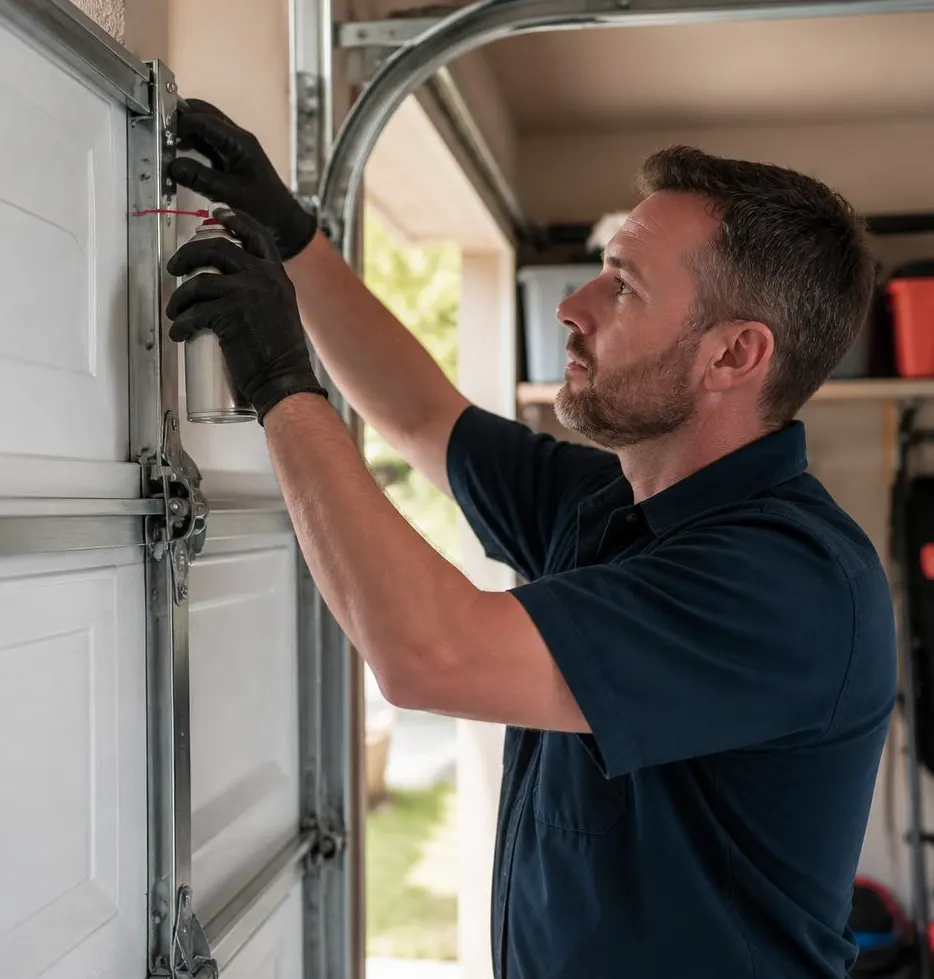
What a Technician Sees on This Kind of Call
The call usually starts the same way: someone's convinced the garage door has nothing to do with the power bill, and someone else is sure it's the whole reason the house feels muggy by 2 p.m. When we get out there, the garage door itself is often fine mechanically — it opens, it closes, the opener works. But crouch down and look along the bottom edge, and there's daylight coming through in spots. Run a hand along the side tracks and you can feel air moving. The weatherstripping is cracked, flattened, or pulled away from the track in a few spots, usually from years of Florida heat baking the rubber and afternoon storms pushing water and wind against it.
That's the piece both spouses are half right about. The door isn't broken. But it's not sealed, and in an attached garage, that matters more than people think.
Why an Attached Garage Leak Reaches the House
A detached garage leaking air is just a hot shed. An attached garage shares at least one wall, and often ductwork, with the living space. In a lot of Lake Wales homes, the AC air handler or supply ducts run through the garage ceiling or a corner of the garage itself. When that space is hot and humid because the door isn't sealing, three things happen:
- The wall between the garage and the house has a bigger temperature difference to fight, so more heat moves through it into conditioned rooms.
- If ductwork runs through the garage, leaky joints or thin insulation there dump garage heat straight into the air you just paid to cool.
- Humidity seeps in through the same gaps, and Florida humidity is no small thing — it makes the AC work harder to pull moisture out of the air before the house feels comfortable, even if the thermostat says it hit the target temperature.
None of this shows up as one dramatic spike. It shows up as a bill that's a little higher than it should be, month after month, especially through the long cooling season Central Florida gets stuck with most of the year.
Where the Gaps Actually Form
It's rarely just one weak spot. Common leak points on garage doors around here include:
- Bottom seal — the rubber astragal along the floor, which wears fastest from heat, grit, and repeated open-close cycles.
- Side and top seals — the stop molding and weatherstripping along the frame, which can pull loose or shrink and crack.
- Panel seams — on older sectional doors, seams between panels can gap slightly if the door has sagged or a panel has warped.
- Wood swelling and shrinking — if any part of the door or frame is wood or wood composite, hurricane-season humidity swells it tight, then it dries and shrinks smaller than the opening, leaving a gap that wasn't there in August.
- Hardware gaps — where the track, hinges, or cable hardware mount through the frame, especially if there's surface rust from salt air or moisture working its way in.
Two Quick Tests You Can Do Tonight
- The dollar bill test: Close the door on a dollar bill at several points along the bottom and sides. If it pulls out easily with no resistance, the seal isn't doing its job there.
- The flashlight test: Have someone stand outside at night while you shine a flashlight around the inside edges of the closed door. Visible light leaking through means air is leaking through too.
What Actually Fixes It — and What Doesn't
Spray foam and caulk around the frame can help with stationary gaps, but they don't fix a door that's out of alignment or seals that are simply worn out. The real fixes, in order of how often they're needed:
- Replace the weatherstripping and bottom seal. This is usually the fastest, least expensive fix and solves most of the leak on its own.
- Realign the door on its tracks. If the door closes unevenly, new seals won't seat right no matter how good they are.
- Replace a warped or dented panel. A single bowed panel can leave a gap that no amount of weatherstripping will close.
- Add or upgrade insulation on the door panels themselves, which helps more with heat transfer through the door face than with air leaks, but pairs well with sealing work for a garage that's noticeably cooler and less humid overall.
When to Call Lake Wales Garage Door Repair
If the dollar bill test fails in multiple spots, the door looks uneven when it closes, or a panel is visibly warped, it's worth having it looked at rather than patching seals on a door that's actually out of alignment underneath. Our Garage Door Tune-Up & Maintenance service covers exactly this — checking alignment, hardware, and seals, and replacing what's worn before it costs you another season of higher bills. If a panel is damaged or swollen beyond saving, our Garage Door Panel Replacement service gets the door back to sealing properly without replacing the whole unit.
If you're in Lake Wales, Winter Haven, Haines City, Bartow, Auburndale, Dundee, Frostproof, or Eagle Lake and you want a straight answer about whether your garage door is costing you money on cooling, give Lake Wales Garage Door Repair a call. We'll check the seals, check the alignment, and tell you plainly what's worth fixing.